
The construction industry is growing
More construction is taking place, more people are employed in the construction industry, and value creation is increasing. The growth trend is clear in the short term, while the longer-term picture is less clear-cut. This is the overall picture for the sector; however, the trend does not necessarily reflect the position of any individual business.
Fewer homes are being built than eight years ago
The total volume of construction starts in 2026 is lower than in 2018. However, a greater floor area was started in 2026 than in 2025. In Q2 2018, approximately 225,000 more square metres of residential construction were started than in each of 2025 and 2026, see Figure 1.
Figure 1
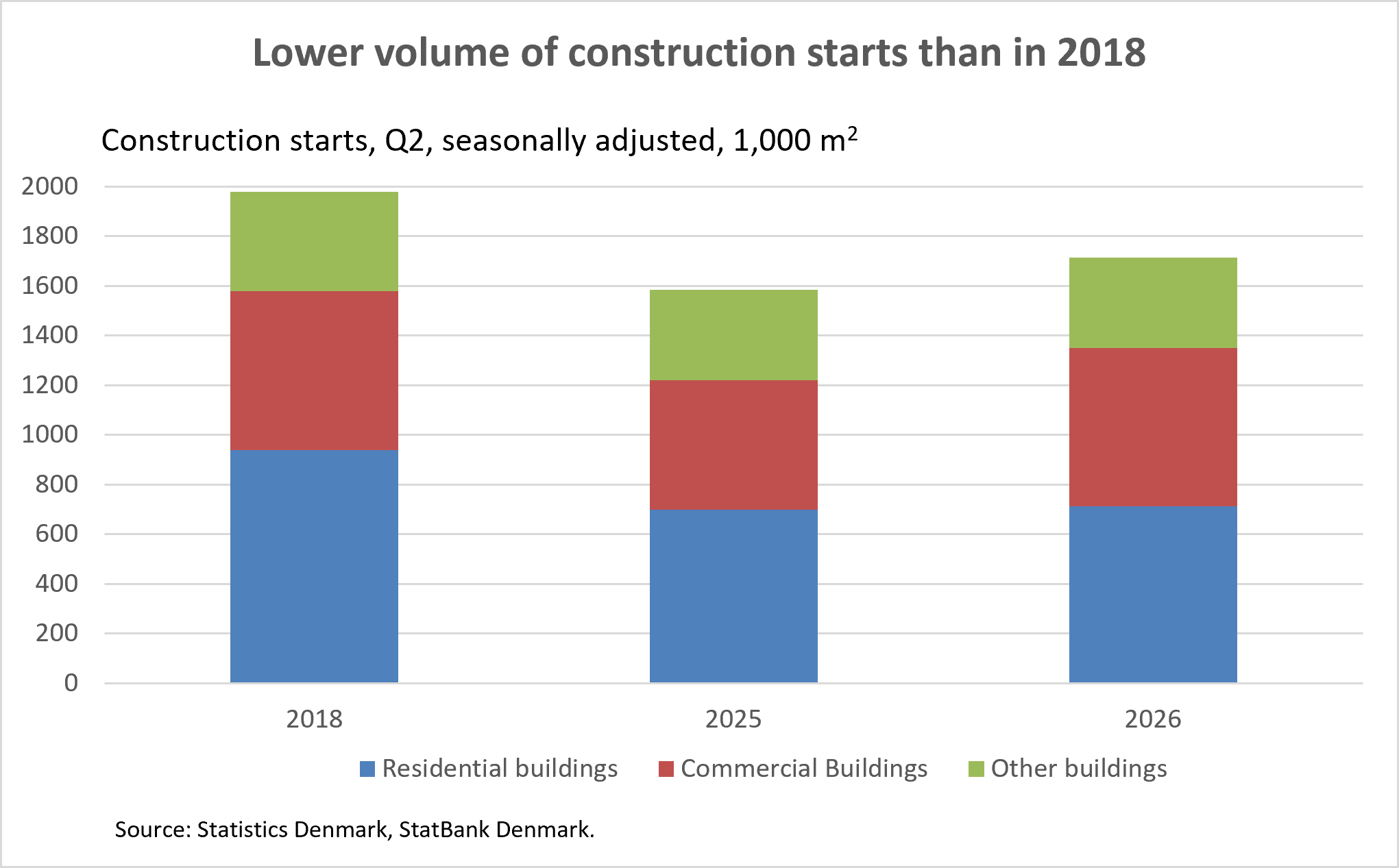
From 2025 to 2026, residential construction increased by only 15,000 m². By contrast, commercial construction rose markedly in Q2 2026, returning to its 2018 level. Between Q2 2025 and Q2 2026, commercial construction increased by 115,000 m², representing growth of more than 20%.
Taken in isolation, the data in Figure 1 may suggest that construction activity was lower in 2026 than in 2018. Other figures, however, point in a different direction.
Growth in turnover
Turnover in the construction sector increased by 49% from 2018 to 2025. This was slightly higher than in industry, where turnover rose by 47.7% from the end of 2018 to the end of 2025. Part of the increase reflects higher labour and material costs. Labour costs in construction and civil engineering rose by approximately 19% between 2018 and 2025, while material costs increased by approximately 28%. Both figures are significantly below the overall increase in turnover.
Rising employment
Higher turnover has coincided with employment growth. Between 2018 and 2025, the construction sector added almost 34,000 employees, bringing total employment in the sector to 208,000 in 2025. This represents an increase of almost 23%. Employment rose across all parts of the sector, see Figure 2.
Figure 2
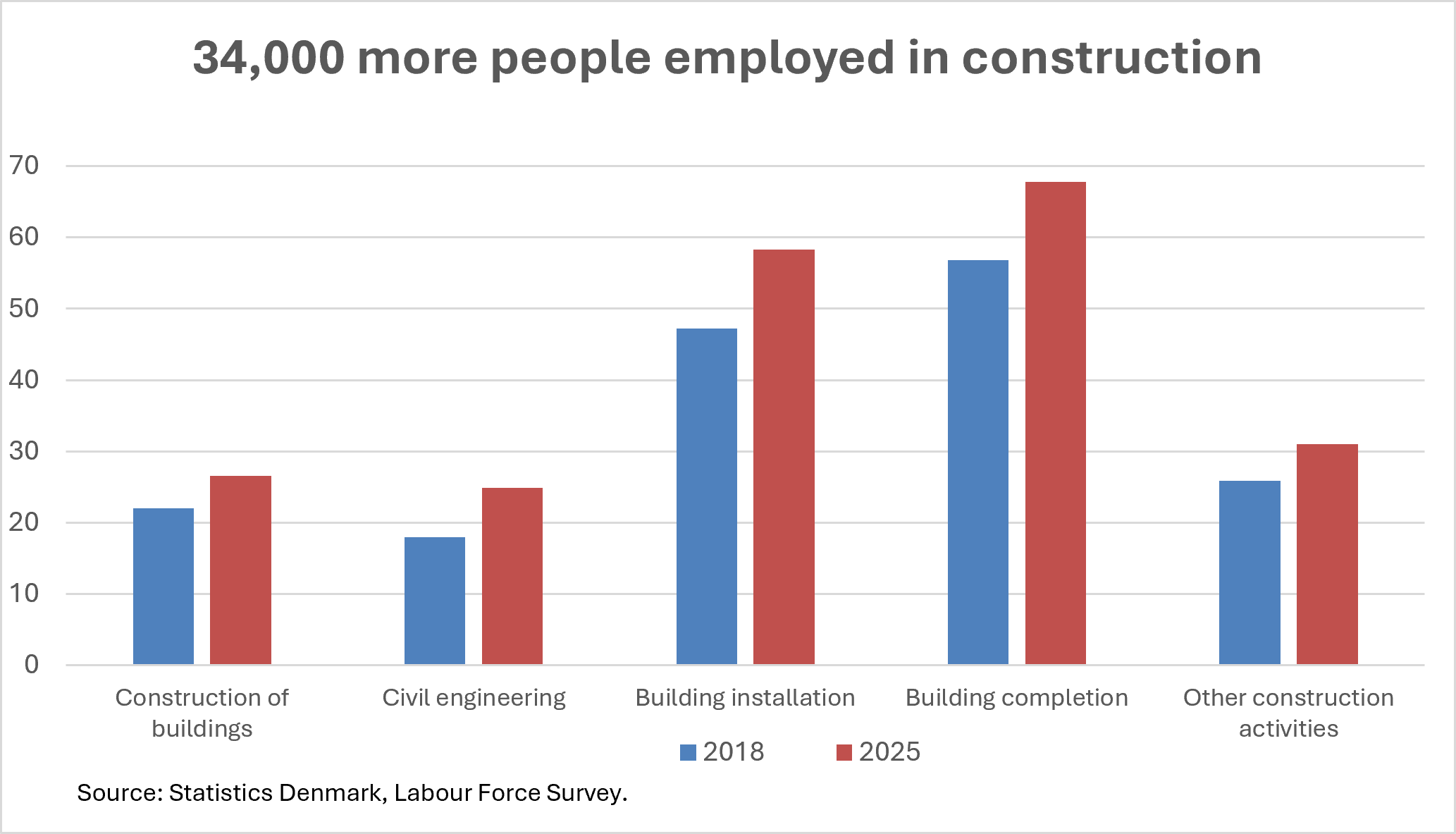
Civil engineering recorded the largest relative increase: employment was 38% higher in 2025 than in 2018.
Employment growth in the construction and civil engineering sector has been distributed very unevenly across Denmark. The largest increases were recorded in Region Zealand and the Capital Region of Denmark, while the North Denmark Region experienced a small decline. Employment in Region Zealand increased by 33%, see Figure 3.
Figure 3
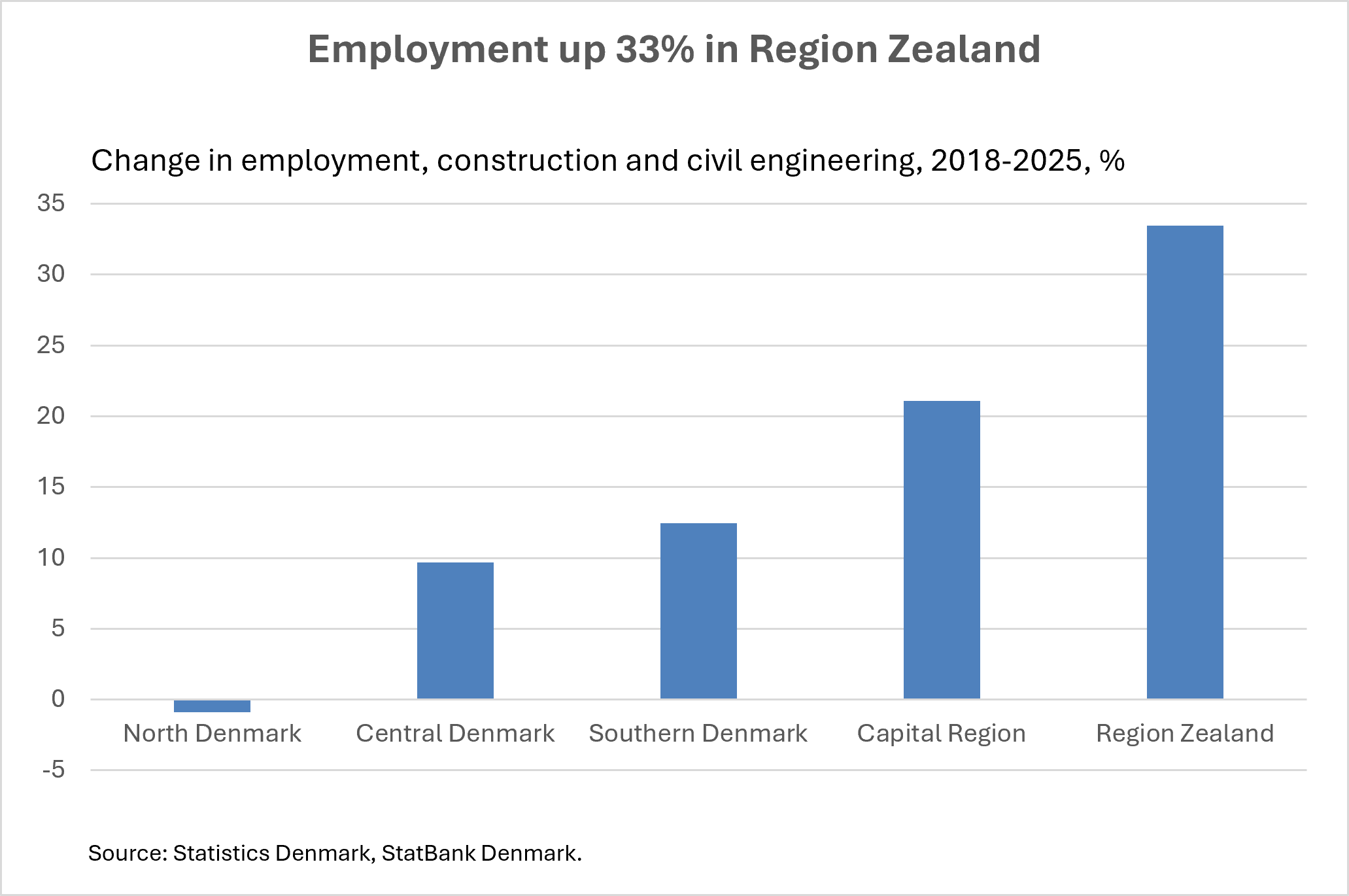
The substantial increase in employment in Region Zealand is likely linked to Novo Nordisk's extensive construction activity in the region, although several other major construction projects have also contributed, particularly the Storstrøm Bridge.
More than four in five employees are of Danish origin
Employment has increased across all origin groups in the construction and civil engineering sector. Between 2018 and 2026, the number of full-time employees of Danish origin rose by 10,600. The second-largest increase was among people with unknown origin or no residence in Denmark, with 5,700 additional people in employment. This increase is likely driven by workers commuting from their home countries.
The proportion of employees of Danish origin fell between 2018 and 2026. This is because employment grew more rapidly among people from Western countries, people from non-Western countries, and people with unknown origin or no residence in Denmark, see Figure 4.
Figure 4
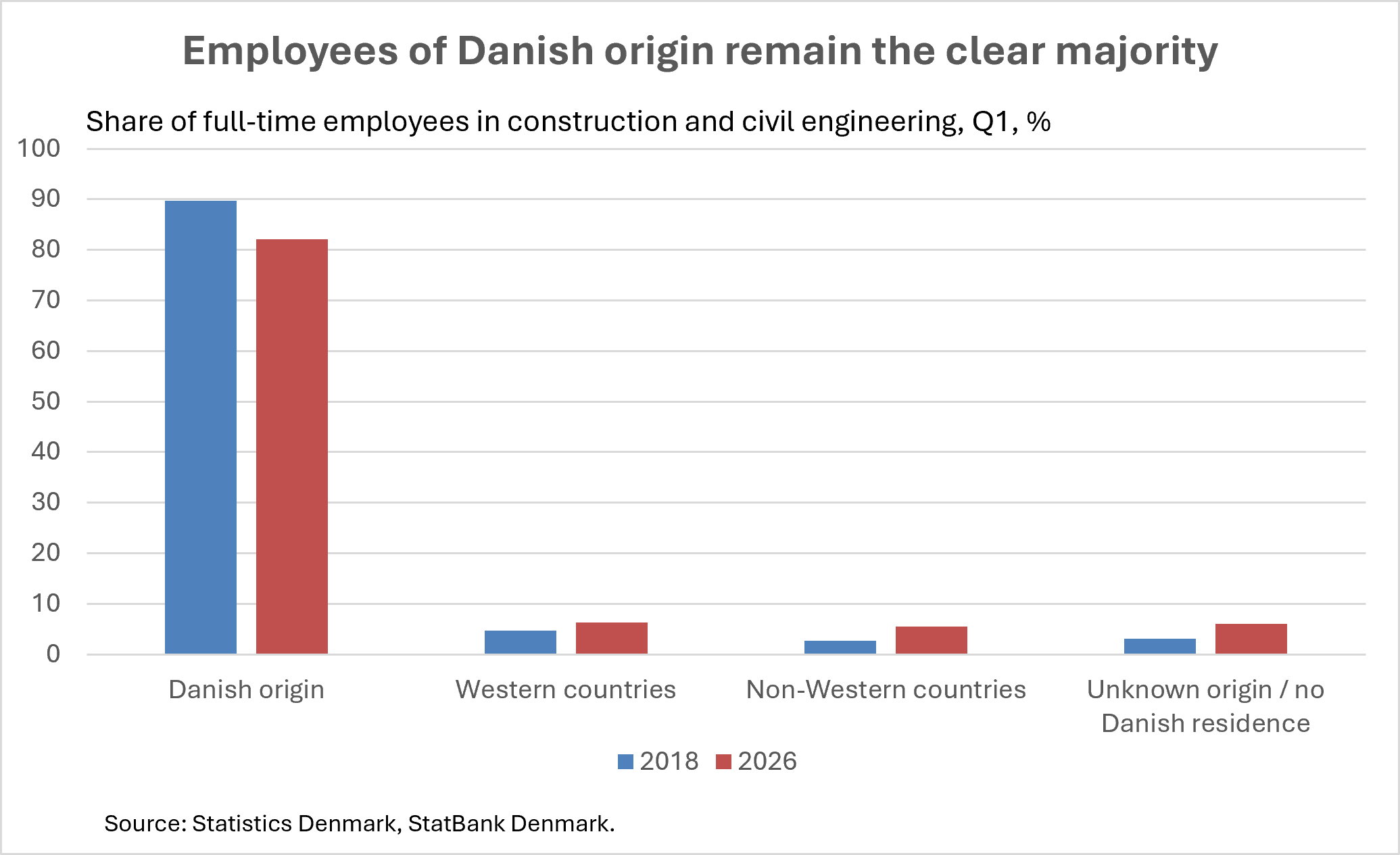
29,000 full-time employees are from countries other than Denmark; 134,000 are of Danish origin.
The wage bill has increased by nearly 50 percent over the past 7 years
The rise in value added and activity in the construction and civil engineering sector is also reflected in the total wage bill. Across all industries, the wage bill increased by 38% from Q4 2018 to Q4 2025. At 48%, growth was highest in construction and civil engineering, followed by business services and industry at 47% and 46%, respectively.
Labour shortages are constraining the sector to a lesser extent
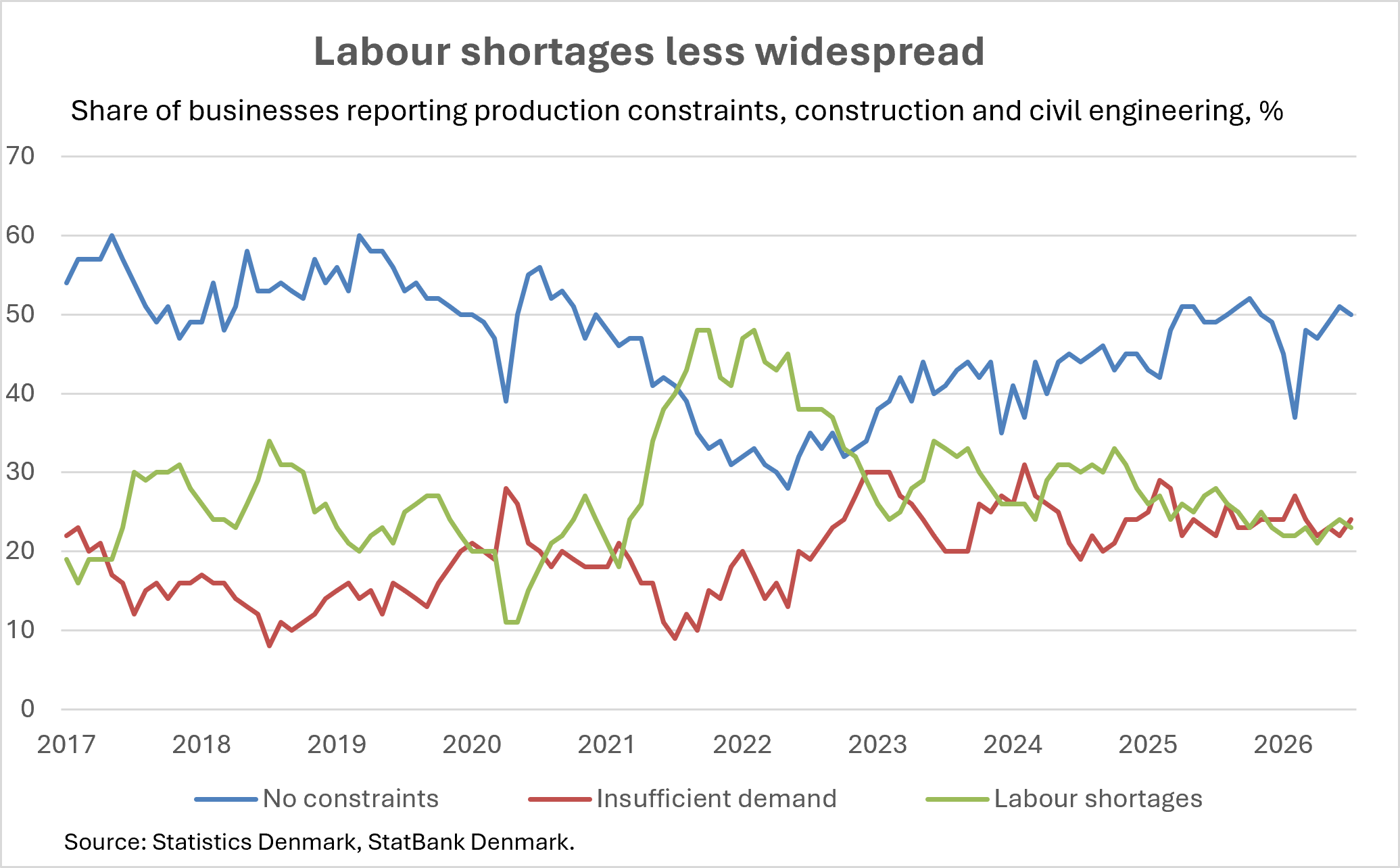
At the end of 2021 and the beginning of 2022, almost half of construction and civil engineering businesses reported limiting production due to labour shortages. Over the past four years, that figure has fallen to 23%.
Over the past four years, insufficient demand has constrained production at approximately 25% of businesses. From 2017 to 2022, the figure was typically slightly lower.
Half of businesses report no production constraints. This share has increased over the past four years and has now returned to its pre-pandemic level, see Figure 5.
Figure 5
Littler's perspective
Littler has extensive experience advising businesses in the construction sector. We also have considerable experience with the employment law issues that arise during construction projects, including collective agreement matters, labour clauses and international workers.
In the second half of 2026, many businesses face two major workforce-related challenges.
First, a comprehensive amendment to the Danish Equal Pay Act will enter into force on 1 January 2027. The amendment implements the EU Pay Transparency Directive, which is intended to ensure equal pay across genders. The new legislation is complex for businesses and goes beyond what is required by the Directive. Businesses may face significant consequences if they fail to implement the new statutory requirements.
A new route for recruiting international workers will also take effect on 1 January 2027. The new scheme will make it possible, among other things, to recruit unskilled workers from countries outside the EU. However, businesses must satisfy a number of conditions to use the scheme. For example, businesses wishing to use it must be certified by the authorities.
Littler is ready to assist businesses with both of these new challenges. Both require a detailed understanding of the relevant legislation to ensure compliance with the new requirements.
Questions regarding this article and the applicable legal framework may be directed to Senior Director Erik Simonsen.
Disclaimer: This article is not and cannot replace legal advice.

Erik Simonsen
Senior Director
+45 44 14 30 96